Brief Work Background and Professional Career
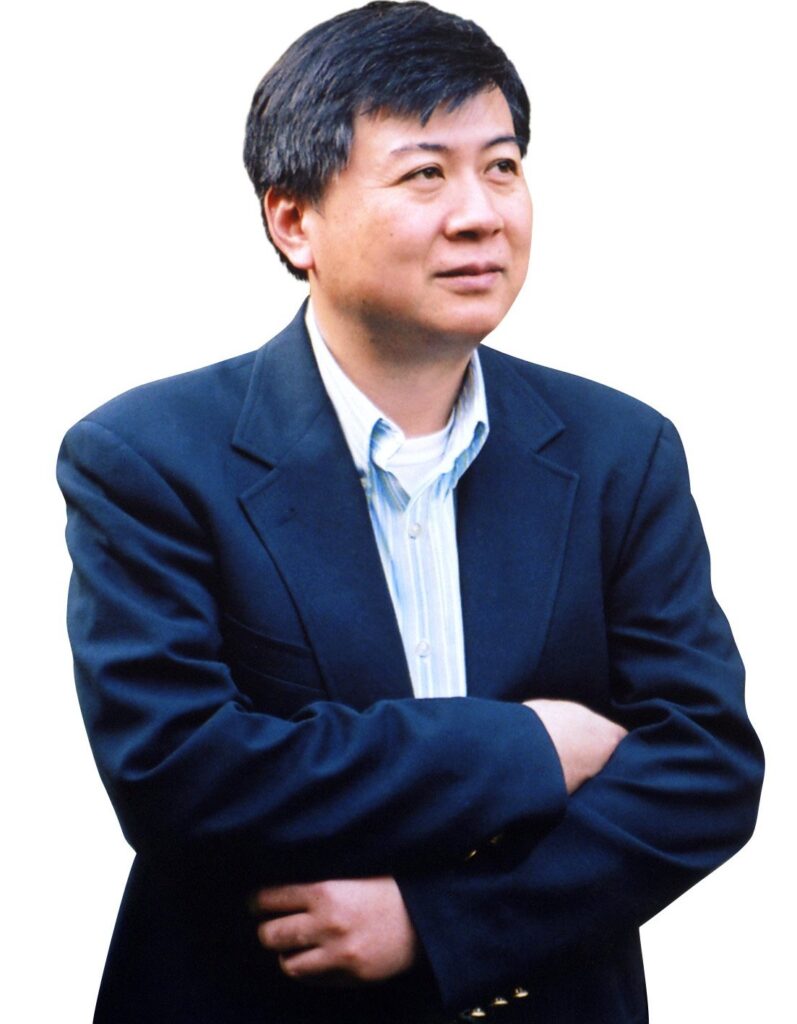
CEO Tetsuo Kondo, Ph. D.
(Dual Ph.Ds in Engineering and Agriculture)
1. Professor of Enviro-sustainable materials science Lab (Endowed Chair), Tokyo University of Agriculture and Technology, Fuchu, Tokyo, 183-8509, Japan; E-mail: tuat-tekondo@go.tuat.ac.jp
2. President & CEO, KT Innovation Co. Ltd., Kugayama, Suginami-ku, Tokyo 168-0082, Japan; E-mail: tekondo@ktinnov.co.jp
Tel: 1. +81-(0)42-367-5588; 2. +81-(0)80-3220-6915 URL: https://ktinnov.co.jp
Degree:
1. Ph.D in Agriculture (Wood Chemistry) from The University of Tokyo
2. Ph.D. in Engineering (Polymer physical chemistry) from Kyoto University.
Education
1983 BSc from The University of Tokyo.
1988 Ph.D. in Science from The University of Tokyo.
2000 Second Ph.D. in Engineering (Polymer Science) from Kyoto University.
Professional Positions
1988 Postdoctoral fellow and Research associate at Department of Chemistry in McGill University. (~1992). (Under supervision of Prof. D. G. Gray)
1992 Forestry and Forest Products Research Institute (FFPRI) as a research scientist.
1993 Senior Research Scientist at FFPRI.
2003 Associate Professor at Kyushu University, (Polymer Science of Biomaterials, Lab. Graduate School of Bioresources and Bioenvironmental Science
2005 Professor at Kyushu University (Biomaterial Design, Lab, Graduate School of Bioresource and Bioenvironmental Sciences)
2010 Fellow of International Academy of Wood Science (IAWS)
2011 Professor at Kyushu University and Director of Bio-architecture Center at Kyushu University (Plural offices till 2013)
2016 (Dual) Professor at Kyushu University (For both of Biomacromolecular Materials Lab and Biomaterial Design, Lab, Graduate School of Bioresourceand Bioenvironmental Sciences)
2022 Professor at Tokyo University of Agriculture and Technology (Cross appointment with Kyushu University: Enviro-sustainable materials science Lab )
2023 Professor at Tokyo University of Agriculture and Technology (Endowed Chair for Enviro-sustainable materials science Lab)
2025 Founded KT Innovation Co. Ltd. and appointed as the President & CEO of the company
At present
Prominent activity on Academic Society
2013 Vice president of The Cellulose Society of Japan
2019 Vice president of The Japan Wood Research Society
Executive Committee member in the Cellulose Society of Japan (till 2027 from 2000), Fiber Society Japan, and Wood Science Society of Japan (2002- 2025). Program committee member at Cellulose and Biomaterials section of American Chemical Society (ACS) (from 2001 to 2005). Editorial board member: “Cellulose” and “Holzforshung”. Fellow of International Academy of Wood Science (IAWS:2010-)
Visiting professor, Lectures at other Universities etc.
Adjunct Professor in Shizuoka University, Visiting Professor in Department of Organic and Macro-molecular Chemistry, Friedrich-Shiller University at Jena (Germany), Lecturer at Graduate School of Agricultural Life Science, The University of Tokyo, and Faculty of Engineering at Kanazawa University.
Visiting scholar for Department of Chemistry, Polymer Physics, Wuhan University (China). Textiles and Clothing, Fiber and Polymer Science University of California at Davis (2013), Visiting Professor of Tokyo Institute of Agriculture and Engineering (2014-2015).
Awards and Honors
1985 Honoring student award of 100 years’ anniversary of the University of Tokyo
1996 Award Winner of “The Cellulose Society of Japan Award for 1996”
Title: “Characterization of hydrogen bonds involved in cellulosics using regioselectively substituted cellulose derivatives as cellulose models.”
2005 Award Winner of 2005 for ”The Society of Fiber Science and Tecnology, Japan”
Title: “A Hierarchical Organizing Design for a Bottom-up 3-D Architecture Using a Bacterium Extruding a Cellulose Nanofiber.”
2010 Fellow of International Academy of Wood Science (IAWS)
2015 14th International Nanotechnology exposition Awards
2017 7th Japan Manufacturing Grand Prize from Ministry of Ecoromy,Trade and Industry.
2021 62nd Award Winner of The Japan Wood Research Society Prize for 2021
Title:“Research and development of Aqueous Counter Collision process for nano-pulverization of various biomass resources”
2025 Advanced Materials Award 2025 winner of International Association of Advanced Materials (IAAM) (Stockholm, Sweden)
Appraisal and Evaluation (Tetsuo Kondo)
Research subjects:
Bio-based nano-material design (=Bio-Alchemy), Polymer physical chemistry, Material Science on cellulose (carbohydrates) including biochemistry, chemistry, and physics. Presently, development of innovative plastic upcycling systems using cellulose nanofibrils.
PRINCIPAL SCIENTIFIC ACHIEVEMENTS
For more than 40 years, Dr. Kondo has been contributing extensively to the interdisciplinary interfaces between chemistry and biology of cellulose, based on cellulose physical chemistry through basic and applied research using various cellulose from different origins.
His academic career started at The University of Tokyo, Japan and further developed at McGill University, Canada (with Dr. Derek Gray) by synthesizing regioselectively substituted cellulose ethers as compound models for understanding hydrogen bonding formation in cellulose homopolymer (Macromolecules 1994, and others). Both of the synthesizing methodology and the resultant products drew the trigger to attract attention of importance in relationship among distribution of substituent, hydrogen bonds and their physicochemical properties, and at present extensive researches by many research groups are still going on in this area.
After joined to Forestry and Forest Products Research Institute (FFPRI), his interest did not stay only at the areas where he used to be, but were extended to native systems, namely, super- and supra-molecular architecture of cellulose in native and artificial systems. Then, he had started to study wood cell wall hierarchical architecture by initially focusing on b-glucan association in native systems using physicochemical approaches such as microscopic FT-IR, and in situ atomic force microscopy (AFM) (Macromolecules 1996&1998). He had also developed his own techniques in these analytical tools to fit carbohydrate polymers having supramolecular structures (Polymer 1999, Biomacromolecules 2005, ACS Omega 2017). In 2000, he was successful to obtain his 2nd Ph.D. in Engineering on Polymer physical chemistry from Kyoto University, Japan.
At the same time, dynamics of b-glucan molecular association in artificial systems was also investigated to control and develop new types of super- and supra-molecular structure by focusing on non-crystalline cellulose. Then, he proposed a concept of a new form of cellulose termed as Nematic Ordered Cellulose (NOC) which exhibits non crystalline yet ordered states (Biomacromolecules 2001). These findings create a new concept to understand how b-glucan chains associate and crystallize.
NOC was found to exhibit unique characteristics; in particular, its surface properties provide a function of tracks or scaffolds for regulated movements of a fiber-production bacterium (Gluconacetobacter xylinus), which produces cellulose ribbon-like nanofibers with 40-60 nm in width accompanied with movements (Proc. Natl. Acad. Sci. USA 2002). Since the interaction between the produced cellulose nanofibers and specific sites of the oriented molecules on the NOC is very strong, NOC can be used as a template for the direction-controlled epitaxial deposition of the nanofibrils. Accordingly, the template could regulate and establish deposition of the patterned 3-D architecture of bacterial cellulose nanofibrils by culturing the bacteria on the NOC scaffold.
He also attempted to reveal the exclusive structure-property relationship in order to extend the usage of these template films for the bacterium culture (J. Biosci. Bioeng 2012&2014), biomimic mineralization (Cellulose 2012) and three-dimensional cell culture (Biofabrication 2013). Then, the unique template technology using nano-patterned templates leaded to a hierarchical organizing design for 3-D nano/micro architecture of bio-based materials (“Bio-Alchemy”).
When he joined Kyushu University, Dr. Kondo proposed a novel nano-pulverization method for bio-based materials only using collision of a pair of high-speed water jets, termed as “Aqueous counter collision (ACC)” (Biomacromolecules, 2011). This method cleaves the weaker interactions such as van der Waals forces selectively without any damage to the molecular structure and finally results in liberating “cellulose nanofibrils” having both hydrophobic faces and hydrophilic faces in a fibril (=Janus type nanofibril) (Carbohydr. Polym. 2014). As an advantage, the ACC method is applicable to any material including carbon materials. The obtained nano-objects have been now extensively studied in basic nano-material science and their application in his laboratory. Chuetsu-Pulp Co. Ltd, Japan employed and manufactured the ACC-method for production of cellulose nanofibrils. By the contribution of the manufacturing, Dr. Kondo won the Japan Manufacturing Award: Award of the Minister of Economy, Trade and Industry, in 2017.
He also found that plant protoplast secreted a micro-sized fiber into culture medium due to an environmental stress response. The fiber was a bundle of hollow sub-fibrils consisted of b-1,3-glucans. This study has focused on how the fibers form in response to intracellular and extracellular environmental stimuli (Planta. 2008, Holzforschung 2012,2014), together with detailed information of how cell wall is formed in response to stimuli.
In 2021, he moved to the present university position as Endowed Chair. He founded his laboratory as an endowed research course at Institute of Agriculture, Tokyo University of Agriculture and Technology (TUAT) on July 1, 2022.
Here, the objective contributes to establishment of sustainable society by pursuing developments of noble methods and bio-based materials, leading to future society. Currently, his lab focuses on the development of innovative plastic upcycling systems using cellulose nanofibrils.
In addition to the above academic achievements, he has extensively contributed to the cellulose science society not only by generating more than 120 graduate students (produced 30 Ph.D. holders as chief supervisor), but by performing activities for academic societies, including program committee members (2005-2007) for ACS Division of Cellulose and Renewable Materials, and the executive committee members for The Cellulose Society of Japan for 20 years, including 2 years of vice president from 2013 and for The Japan Wood Research Society for 15 years including 2 years of vice president from 2019. During the period, in the year of 2017, Dr. Kondo played a role of the chairs simultaneously to organize 2 international symposiums, 4th International Cellulose Conference (ICC) 2017 and 3rd Symposium on Bacterial NanoCellulose (BNC) in Fukuoka. In 2019, he was elected as Vice President of The Japan Wood Research Society (2000 members). He published 277 papers including reviews and books, and 22 patents.
[Appendix] Selected list of publications regarding ACC-CNF and production of PP nanocomposites with ACC-CNFs by Tetsuo Kondo: Related 70 papers /Total 277papers
- T. Kondo*, Material design for impact-resistant nanocomposites of polypropylene with ultra-trace quantity of amphiphilic cellulose nanofibrils, Jenny Stanford Publishing, in press.
- T. Kondo*, Y. Kataoka, T. Hatano, R. Funada, Emergence of Amphiphilicity on Surfaces of Pure Cellulose Nanofibrils Directly Generated by Aqueous Counter Collision Process, Biomacromolecules, 25(9), 5909–5917 (2024). https://doi.org/10.1021/acs.biomac.4c00581
- Onajite T. Abafe Diejomaoh, Alessandra Lavoratti, Jude Laverock, Todor T. Koev, Yaroslav Z. Khimyak, Tetsuo Kondo, Stephen J. Eichhorn*, Surface modification of cellulose nanomaterials with amine functionalized fluorinated ionic liquids for hydrophobicity and high thermal stability, Carbohydr. Polym., 344, 122519 (2024). https://doi.org/10.1016/j.carbpol.2024.122519
- M. Kamogawa and T. Kondo*, Tensile property of iPP based composites embedding “plant cell wall”-mimicked frameworks of ultratrace amphiphilic cellulose nanofibrils derived from various raw materials, J. Fiber Sci. Tech. 80(5), 100-108 (2024). https://doi.org/10.2115/fiberst.2024-0011
- M. Kamogawa, Y. Tsujita, T. Kondo*, Transcrystalline polypropylene-based honeycomb structures spontaneously induced on amphiphilic cellulose nanofibrils prepared by aqueous counter collision, J. Fiber Sci. Tech. 80(4), 90-99 (2024). https://doi.org/10.2115/fiberst.2024-0010
- T. Kondo*, G. Ishikawa, M. Kamogawa, Y. Tsujita, S. Yokota, T. Tsuji, S. Tagawa, D. Tatsumi, Impact-resistant nanocomposite plastics embedding “plant cell walls”-mimicked frameworks with ultratrace amounts of amphiphilic cellulose nanofibrils, ACS Appli. Polym. Mater., 6(2), 1276-1285 (2024). https://doi.org/10.1021/acsapm.3c02278
- S. Tagawa, T. Kondo, K. Toyooka, Kae Akita, K. Ishida, and R. Funada*, Application of correlative light and electron microscopy (CLEM) in validating confocal laser scanning microscopic measurements of the fiber length of nanocellulose, Sci. Rep. 48(9), 826-827 (2023). https://doi.org/10.1016/j.tibs.2023.05.003
- G. Takayama and T. Kondo*, Quantitative evaluation of fiber network structure-property relationships in bacterial cellulose hydrogels, Carbohydr. Polym., 313, 121311 (2023) https://doi.org/10.1016/j.carbpol.2023.121311
- K. Ishida and T. Kondo*, Evaluation of surface free energy inducing interfacial adhesion of amphiphilic cellulose nanofibrils, Biomacromolecules, 24(8), 3786-3793 (2023). https://doi.org/10.1021/acs.biomac.3c00443
- K. Ishida and T. Kondo*, Anisotropic frictional properties induced by cellulose nanofibril assembly, Biomacromolecules, 24 (7), 3009-3015 (2023). https://doi.org/10.1021/acs.biomac.3c00072
- G. Takayama and T. Kondo*, In situ visualization of the tensile deformation mechanism of bacterial cellulose network, Carbohydr. Polym., 313, 120883 (2023) https://doi.org/10.1016/j.carbpol.2023.120883
- T. Kondo*, Cellulose nanofibrils pulverized from biomass resources: Past, present, and future perspectives, KONA Powder. and Part. J., 40, 109-123 (2023) https://doi.org/10.14356/kona.2023003
- L. Yu, D. Tatsumi, T. Kondo*, Preparation of carbon nanoparticles from activated carbon by aqueous counter collision, J. Wood Sci., 68, 29 (2022) https://doi.org/10.1186/s10086-022-02036-3
- D. Tatsumi, A. Kanda, T. Kondo*, Characterization of mercerized cellulose nanofibrils prepared by aqueous counter collision process, J. Wood Sci.,68,13 (2022).
- R. Takahama, H. Kato, G. Takayama, K.Tajima, T. Kondo*, Physical characteristics and cell-adhesive properties of in vivo fabricated bacterial cellulose/hyaluronan nanocomposites, Cellulose, 29, 3239–3251 (2022). https://doi.org/10.1007/s10570-022-04480-2
- S. Yokota, A. Nishimoto, T. Kondo*, Alkali-activation of cellulose nanofibrils to facilitate surface chemical modification under aqueous conditions, J. Wood Sci., 68,14 (2022). https://doi.org/10.1186/s10086-022-02022-9
- H. Utsunomiya, Y. Tsujita, T. Kondo*, Cellulose nanoanemone: an asymmetric form of nanocellulose, Cellulose, 29, 2899–2916 (2022). https://doi.org/10.1007/s10570-021-04231-9
- R. Takahama, H. Kato, K. Tajima, S. Tagawa, T. Kondo, Biofabrication of a hyaluronan/bacterial cellulose composite nanofibril by secretion from engineered Gluconacetobacter, Biomacromolecules, 22(11), 4709–4719 (2021) https://doi.org/10.1021/acs.biomac.1c00987
- K. Ishida, S. Yokota, T. Kondo*, Emulsifying properties of α-chitin nanofibrils prepared by aqueous counter collision, J. Fiber Sci. Tech., 77(8), 203-212 (2021). https://doi.org/10.2115/fiberst.2021-0022
- G. Ishikawa, T. Tsuji, S. Tagawa, T. Kondo*, Adsorption of Janus-type amphiphilic cellulose nanofibrils onto microspheres of semi-crystalline polymers, Macromolecules, 54(20), 9393–9400 (2021). https://doi.org/10.1021/acs.macromol.1c01163.
- K. Ishida, S. Yokota, T. Kondo*, “Localized surface acetylation of aqueous counter collision cellulose nanofibrils using a Pickering emulsion as an interfacial reaction platform”, Carbohydr. Polym., 261, 117845 (2021). https://doi.org/10.1016/j.carbpol.2021.117845
- S. Tagawa, K. Ishida, T. Tsuji, T. Kondo*, Facile size evaluation of cellulose nanofibrils adsorbed on polypropylene substrates using fluorescence microscopy, Cellulose, 28, 2917-2929 (2021). https://doi.org/10.1007/s10570-021-03759-0
- T. Tsuji, K. Tsuboi, S. Yokota, S. Tagawa, T. Kondo*, Characterization of an Amphiphilic Janus-Type Surface in the Cellulose Nanofibril Prepared by Aqueous Counter Collision, Biomacromolecules, 22, 620-628 (2021). https://doi.org/10.1021/acs.biomac.0c01464
- W. Ye, S. Yokota, Y. Fan, T. Kondo*, A Combination of Aqueous Counter Collision and TEMPO-mediated Oxidation for Double up Carboxyl Contents of α-Chitin Nanofibers, Cellulose, 28, 2167-2181 (2021). https://doi.org/10.1007/s10570-021-03676-2
- G. Ishikawa and T. Kondo*, Thermodynamic characterization of dual nano-size effects on nanocellulose surfaces probed by poly(vinyl alcohol) crystallization behavior in their nanocomposites, J. Wood Sci., 67, 25 (2021). https://doi.org/10.1186/s10086-021-01957-9
- S. Yokota, S. Tagawa, T. Kondo*, Facile surface modification of amphiphilic cellulose nanofibrils prepared by aqueous counter collision, Carbohydr. Polym., 255, 117342 (2021). https://doi.org/10.1016/j.carbpol.2020.117342
- Y. Zhang、S. Yoshimura、N. Akita, M. Shimomura, T. Kondo, A new plant container created through the fusion of nanocellulose and design, Annual Design Review of JSSD (Japanese), 26(1), 1_14-1_19, (2020). https://doi.org/10.11247/adrjssd.26.1_1_14
- D. Tatsumi, T. Ishihara, T. Kondo*, D. Aoki, K. Fukushima, Solution and film properties of cellulose and cellulose acetate prepared using ionic liquid mixed solvent, Zairyo/Journal of the Society of Materials Science, Japan, 69(6), 465-469 (2020). https://doi.org/10.2472/jsms.69.465
- T. Ishihara, D. Tatsumi, T. Kondo*, H. Tanaka, I. Iwata, Characterization of cellulose/cellulose acetate films prepared by coagulation method of blended ionic liquid solution, Zairyo / Journal of the Society of Materials Science, Japan, 69(6), 446-451 (2020). https://doi.org/10.2472/jsms.69.446
- S. Matsuo, S. Tagawa, Y. Matsusaki, Y. Uchi, T. Kondo*, Callose-synthesizing enzymes as membrane proteins of Betula protoplasts secrete bundles of β-1,3-glucan hollow fibrils under Ca2+-rich and acidic culture conditions, Holzforschung, 74(8), 725-732 (2020). https://doi.org/10.1515/hf-2019-0142
- S. Yokota, K. Kamada, A. Sugiyama, T. Kondo*, Pickering emulsion stabilization by using amphiphilic cellulose nanofibrils prepared by aqueous counter collision, Carbohydr. Polym., 226, 115293, (2019). https://doi.org/10.1016/j.carbpol.2019.115293
- Y. Tsujita and T. Kondo*, “A building block of collagen fibrils demonstrated by sequential aqueous counter collision process”, J. Fiber Sci.Tech., 75(9) 112-118 (2019). https://doi.org/10.2115/fiberst.2019-0014
- S. N. Rao, Y. Tsujita T. Kondo*, “Surface modification of oriented polysaccharide scaffolds using biotic nanofibers for epidermal cell culture”, Cellulose, 26. 7971-7981 (2019). https://doi.org/10.1007/s10570-019-02615-6
- S. Tagawa, Y. Yamagishi, U. Watanabe, R. Funada T. Kondo*, “Dynamics of structural polysaccharides deposition on the plasma-membrane surface of plant protoplasts during cell wall regeneration” J. Wood Sci., 65, 47 (2019). https://doi.org/10.1186/s10086-019-1826-0
- P. Apelgren, E. Karabulut, M. Amoroso, A. Mantas, Á. H. Martínez, L. Kölby, T. Kondo, G. Toriz , P. Gatenholm, "In vivo Human Cartilage Formation in 3D Bioprinted Constructs with a Novel Bacterial Nanocellulose Bioink", ACS Biomater. Sci. Eng. 5(5), 2482-2490 (2019). https://doi.org/10.1021/acsbiomaterials.9b00157
- S. Tagawa and T. Kondo*, “Secretion of a callose hollow fiber from herbaceous plant protoplasts induced by inhibition of cell wall formation”, J. Wood Sci., 64, 467-476 (2018). https://doi.org/10.1007/s10086-018-1726-8
- D. Klemm, E. D. Cranston, D. Fischer, M. Gama, S. A. Kedzior, D. Kralisch, F. Kramer, T. Kondo, T. Lindström, S. Nietzsche, K. Petzold-Welcke, F. Rauchfuß, “Nanocellulose as a natural source for groundbreaking applications in materials science: Today's state” Mater. Today, 21(7), 720–748 (2018) https://doi.org/10.1016/j.mattod.2018.02.001
- S. Huan, S. Yokota, L. Bai, M. Ago, M. Borghei, T. Kondo, O. J. Rojas, “Formulation and Composition Effects in Phase Transitions of Emulsions Costabilized by Cellulose Nanofibrils and an Ionic Surfactant” Biomacromolecules, 18, 4393-4404 (2017). https://doi.org/10.1021/acs.biomac.7b01452
- Y. Hishikawa, E. Togawa, T. Kondo*, “Characterization of Individual Hydrogen Bonds in Crystalline Regenerated Cellulose Using Resolved Polarized FTIR Spectra”, ACS Omega, 2(4), 1469-1476 (2017). https://doi.org/10.1021/acsomega.6b00364
- Tardy BL., Yokota, S., Ago, M., Xiang, W., T. Kondo*, Bordes, R. Rojas, OJ., “Nanocellulose-surfactant interactions”, Curr. Opin. Coll. Int. Sci., 29, 57-67, (2017). https://doi.org/10.1016/j.cocis.2017.02.004
- Febrianto, F., Hidayat, W., Wistara, INJ., Park, SH., Jang, J.H., Lee, S.H., Teramoto, Y., T. Kondo* Kim, N.H., “Influence of Impact Modifier-Coupling agent Combination on Mechanical Properties of Wood Flour-Reinforced Polypropylene Composit”, J. Fac. Agr., Kyushu Univ., 62(2), 445-450(2017). https://doi.org/10.5109/1854019
- G. Ishikawa and T. Kondo*, “Thermodynamic effect on interaction between crystalline phases in size-controlled ACC-bacterial nanocellulose and poly(vinyl alcohol)v, Cellulose, 24(12), 5495-5503, (2017). https://doi.org/10.1007/s10570-017-1532-2
- W. Hidayat, Y. Qi, J. H. Jang, F. Febrianto, S.H. Lee, H.M. Chae, T. Kondo*, N.H. Kim, “Carbonization Characteristics of Juvenile Woods from Some Tropical Trees Planted in Indonesia”, J. Fac. Agr., Kyushu Univ., 62(1), 145-152 (2017). https://doi.org/10.5109/1801799
- F. Jiang, T. Kondo, Y-L. Hsieh, “Rice straw cellulose nanofibrils via aqueous counter collision and differential centrifugation and self-assembled structures”, ACS Sustain. Chem. Eng., 4, 1697-1706 (2016). https://doi.org/10.1021/acssuschemeng.5b01653
- A. Nagashima, T. Tsuji, T. Kondo*, “A uniaxially oriented nanofibrous cellulose scaffold from pellicles produced by Gluconacetobacter xylinus in dissolved oxygen culture”, Carbohydr. Polym. 135, 215-224 (2016). https://doi.org/10.1016/j.carbpol.2015.08.077
- J. Fang, S. Kawano, K. Tajima, T. Kondo*, “In vivo curdlan/cellulose bionanocomposite synthesis by genetically modified Gluconacetobacter xylinus”, Biomacromolecules, 16, 3154-3160 (2015). https://doi.org/10.1021/acs.biomac.5b01075
- Y. Zhao, S. Koizumi, T. Kondo, “A Crafty utilization of intermediate-angle neutron scattering and contrast variation by water-exchange to study the microstructure of microbial cellulose”, JPS Conf. Proc., 033002 (2015). http://dx.doi.org/10.7566/JPSCP.8.033002
- Y. Zhao, S. Koizumi, D. Yamaguchi, T. Kondo, “Hierarchical structure in microbial cellulose: What happens during the drying process”, Eur. Phys. J. E., 37(129), (2014). https://doi.org/10.1140/epje/i2014-14129-7
- T. Kondo*, and W. Kasai, “Autonomous bottom-up fabrication of three-dimensional nano/microcellulose honeycomb structures, directed by bacterial nanobuilder”, J. Biosci. Bioeng. 118(4), 482-487 (2014). https://doi.org/10.1016/j.jbiosc.2014.04.002
- Y. Kawano and T. Kondo*, “Preparation of Aqueous Carbon Material Suspensions by Aqueous Counter Collision”, Chem. Lett, 43(4), 483-485 (2014). https://doi.org/10.1246/cl.131046
- K. Tsuboi, S. Yokota, T. Kondo*, “Difference between bamboo- and wood-derived cellulose nanofibers prepared by the aqueous counter collision method”, Nord. Pulp. Pap. Res. J. 29(1), 69-76 (2014). https://doi.org/10.3183/NPPRJ-2014-29-01-p069-076
- T. Kondo*, R. Kose, H. Naito, W. Kasai, “Aqueous counter collision using paired water jets as a novel means of preparing bio-nanofibers”, Carbohydr. Polym. 112(1), 284-290 (2014). https://doi.org/10.1016/j.carbpol.2014.05.064
- T. Kondo*, D. Kumon, A. Mieno, Y. Tsujita, R. Kose, “Preparation and characterization of two types of separate collagen nanofibers with different widths using aqueous counter collision as a gentle top-down process”, Mater. Res Express, 1, 045016 (2014). https://doi.org/10.1088/2053-1591/1/4/045016
- F. Fu, J. Zhou, X. Zhou, L. Zhang, D. Li, T. Kondo, “Green Method for Production of cellulose multifilament from cellulose carbamate on a pilot scale”, ACS Sustain. Chem. Eng., 2(10), 2363-2370 (2014). https://doi.org/10.1021/sc5003787
- S. Matsuo, A. Takenaga, T. Seyama, T. Kondo*, “Secretion of a bundle of (1→3)-ß-glucan hollow fibrils from protoplasts of callus suspension under a Ca2+-rich and acidic stressed condition”, Holzforschung, 68(1), 69-73 (2014). https://doi.org/10.1515/hf-2013-0010
- T. Seyama, E-Y. Suh, T. Kondo*, “Three-dimensional culture of epidermal cells on ordered cellulose scaffolds”, Biofabrication, 5(2), 025010 (2013). https://doi.org/10.1088/1758-5082/5/2/025010
- B. Jia, Y. Li, B. Yang, D. Xiao, S. Zhang, A. V. Rajulu, T. Kondo, L. Zhang, J. Zhou, “Effect of microcrystal cellulose and cellulose whisker on biocompatibility of cellulose-based electrospun scaffolds”, Cellulose, 20, 1911-1923 (2013). https://doi.org/10.1007/s10570-013-9952-0
- J. You., H. Hu, J. Zhou., L. Zhang, Y. Zhang, T. Kondo, “Novel Cellulose Polyampholyte−Gold Nanoparticles-Based Colorimetric Competition Assay for the Detection of Cysteine and Mercury (II) ”, Langmuir, 29, 5085-5092 (2013). https://doi.org/10.1021/la3050913
- L. Zhang, C. Zhao, J. Zhou, T. Kondo, “Fluorescent micelles based on hydrophobically modified cationic cellulose for sensing trace explosives in aqueous solutions”, J. Mater. Chem. C, 1, 5756-5764 (2013). https://doi.org/10.1039/C3TC30689E
- R. Kose, and T. Kondo*, “Size effects of cellulose nanofibers for enhancing crystallization of Poly (lactic acid) ”, J. Appl. Polym. Sci., 128, 1200-1205 (2013). https://doi.org/10.1002/APP.38308
- K. Higashi and T. Kondo*, “Nematic ordered cellulose templates mediating order-patterned deposition accompanied with synthesis of calcium phosphates”, Cellulose, 19, 81-90 (2012). https://doi.org/10.1007/s10570-011-9627-7
- T. Kondo*, W. Kasai, M. Nojiri, Y. Hishikawa, E. Togawa, D. Romanovicz, R. M. Brown, Jr., “Regulated patterns of bacterial movements based on their secreted cellulose nanofibers interacting interfacially with ordered chitin templates”, J. Biosci. Bioeng. 114(1), 113-120 (2012). https://doi.org/10.1016/j.jbiosc.2012.02.020
- J. P. Roubroeks, and T. Kondo*, “Nano- and microstructures in stretched and non-stretched blend gels of cellulose and hemicelluloses”, Holzforschung, 66, 993–1000 (2012). https://doi.org/10.1515/hf-2011-0136
- T. Takahashi, T. Kondo, K. Tanaka, S. Hattori, S. Irie, S. Kudoh, S. Imura, H. Kanda, “Measurement of solar UV radiation in Antarctica with collagen sheets”, Photochem. Photobiol. Sci., 11,1193-1200 (2012). https://doi.org/10.1039/c2pp05365a
- T. Takahashi, T. Kondo, K. Tanaka, S. Hattoric, S. Iriec, S. Kudohd, S. Imurad, H. Kandad, “Using collagen artificial skin to estimate the protection effects of UV-cut materials against sunlight under the Antarctic ozone hole”, Polym. Deg. and Stab. 97, 1002-1009 (2012). https://doi.org/10.1016/j.polymdegradstab.2012.03.018
- T. Takahashi, T. Hoshino, T. Kondo, S. Imura, S. Kudoh, K. Yoshino, “Biosynthesis of Microbial Cellulose from the Antarctic Microorganisms”, J. Soc. Elect. Mat. Eng., 21(1),5-10 (2012). http://id.ndl.go.jp/bib/032483137
- T. Takahashi, Y. Aso, W. Kasai, T. Kondo*, “Synergetic deodorant effect and antibacterial activity of composite paper containing waste tea leaves”, J. Wood Sci., 57, 308-316 (2011). https://doi.org/10.1007/s10086-010-1171-9
- R. Kose, I. Mitani, W. Kasai, T. Kondo*, “‘‘Nanocellulose” as a single nanofiber prepared from pellicle secreted by Gluconacetobacter xylinus using aqueous counter collision”, Biomacromolecules, 12(3), 716-720 (2011). https://doi.org/10.1021/bm1013469
- R. Kose and T. Kondo*, “Favorable 3D-network formation of chitin nanofibers dispersed in water prepared using aqueous counter collision”, Sen’i Gakkaishi, 67(4), 91-95 (2011). https://doi.org/10.2115/fiber.67.91
- R. Kose, W. Kasai, T. Kondo*, “Switching surface properties of substrates by coating with a cellulose nanofiber having a high adsorbability”, Sen’i Gakkaishi, 67(7), 163-168 (2011). https://doi.org/10.2115/fiber.67.163